Daily Digest
One client for many providers
One OpenAI-shaped client. A local gateway maps aliases to auth.
The problem
An agent that uses more than one model provider soon has three SDKs, three auth schemes and three sets of response formats. Switching a model means editing code, and every vendor secret lives inside the agent process.
The technique
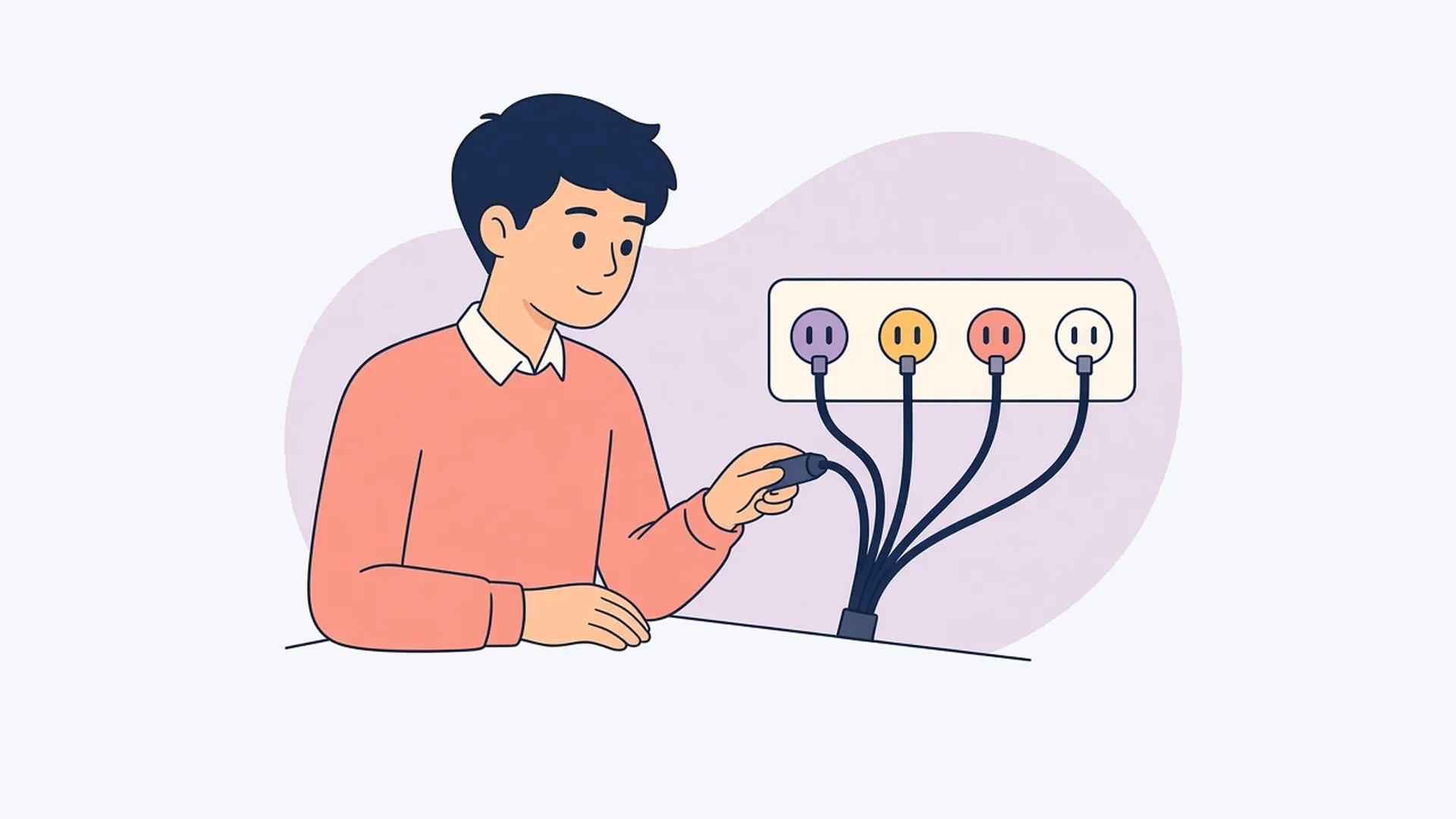
Put one gateway between the agent and the providers. The agent speaks a single client shape, OpenAI-compatible chat. The gateway holds the credentials, maps a model alias to an upstream, and translates the request and response formats.
CLIProxyAPI (router-for-me/CLIProxyAPI, MIT, Go) is one open-source example: 56,617 GitHub stars and 8,666 forks as of 27 October 2026, with commits landing that same day. Those are their numbers. It exposes OpenAI-, Claude- and Gemini-compatible endpoints. Behind them it can use API keys, generic OpenAI-compatible providers, or OAuth logins from coding CLIs. It also adds round-robin across accounts, retries, and cooling for credentials that hit their quota. The translation lives in per-format translator packages, and there is a Go SDK for embedding it.
What we saw
Our own check was offline only. On 27 October 2026 we cloned the repo onto a Linux test box and built it: go build exited 0 after 36 s and produced a 95 MB binary. We used no vendor accounts. Instead, two fake OpenAI-compatible servers ran as upstreams A and B, with the aliases alpha and beta and dummy keys.
A request without a key or with a wrong key got 401. /v1/models listed exactly alpha and beta. The same OpenAI-shaped call with model alpha returned 200 from A in 3.7 ms; with model beta it returned 200 from B in 2.8 ms. Each upstream received only its own key; the local client key was never forwarded. A Claude-shaped /v1/messages call for beta returned 200 as an Anthropic-format reply, translated from B's OpenAI reply. An unknown model got a clean 400 model_not_found. Running -codex-device-login printed an OpenAI device-code URL; we did not complete it.
Limits
Offline only. We did not exercise any real CLI OAuth channel. Latency, streaming, tools and quota behaviour on real providers need a live retest. Sending a personal CLI subscription through a proxy, especially one that by default sends the official Codex client headers (disable-codex-cloaking: false), may break a provider's terms. Use API keys or channels you are allowed to use, and check each provider's terms. The gateway holds every credential: bind it to 127.0.0.1, set strong client keys, and lock down the management API. On startup it fetched a Grok CLI version from npm and a management-panel asset; audit that before you run it on a locked-down host. The project has 779 open issues and a v8 config layout, so pin a commit.
Try it
Clone https://github.com/router-for-me/CLIProxyAPI, run go build -o cliproxy ./cmd/server, copy config.example.yaml to config.yaml, set access.api-keys and add your upstreams and aliases, then start ./cliproxy -config config.yaml. Point any OpenAI SDK at base_url http://127.0.0.1:8317/v1 and choose an upstream by alias. Confirm /v1/models with your local key before you wire the agent.